Thursday, May 3, 2012

Water bath

Water Bath is a bath of fresh or salt water, as distinguished from a vapor bath. In chemistry, a copper vessel, having the upper cover perforated with circular openings from two to three inches in diameter. When in use it is nearly filled with water, which is kept boiling by means of a gas burner, and the metallic or porcelain basin containing the liquid intended to be evaporated is placed over the openings mentioned above.

Wednesday, May 2, 2012

Waterfall

   Waterfall, or Cataract, is the fall or per-pendicular descent of water from a stream or river, found mostly in mountainous regions. It is usually the result of a geológi¬ca! upheaval in which ¡mínense masses of rock were shifted hundreds of feet from their former position. In geologic time whole areas were thus elevated and others depressed, and in favorable locations where the fault was abrupt, waterfalls were formed. Subsequent changes resulted from erosion of rocks of different hardness. A remarkable series of waterfalls exists along the inward edge of the Atlantic coastal plain, in the neighborhood of the cities that lie between Trenton, N. J., and Augusta, Ga. Mountain cataracts or cascades make the highest waterfalls. Some of the most important waterfalls and cataracts are: The Falls of Yosemite in California, over 2,500 feet, the highest in the world; the Oroco Falls at Monte Rosa, Switzerland. over 2,000 feet; Victoria Falls in Africa, over 420 feet; Niagara Falls, 165 feet, and Iguassu Falls on the Iguassu River, which separates Argentina and Brazil. In high water the Iguassu Falls are greater in volume than Niagara Falls and are much greater both in height and width; the Gavarnie Falls in the Pyrenees are 1,385 feet; and the Staubbach Falls, Switzerland, 908 feet. Other celebrated waterfalls of the world are: Bridal Veil, Yosemite Park, 620 feet; Chamberlain, British Guiana, 300 feet; Fairy, Rainier Park, 700 feet; Gersoppa, India, 830 feet; Granite, Rainier Park, 350 feet; Illilouette, Yosemite Park, 370 feet; Kalambo, South Africa, 1,400 feet; Multnomah, Oregon, 850 feet; Nevada, Yosemite Park, 594 feet; Ribbon, Yosemite Park, 1,612 feet; Rjukan, Norway, 780 feet; Roraima, British Guiana, 1,500 feet; Skjaeggedalsfos, Norway, 530 feet; Sluiskin, Rainier Park, 1,300 feet; Sutherland, New Zealand 1,904 feet; Takkakaw, British Columbia, 1,200 feet; Vettis, Norway, 950 feet; Voringfos, Norway, 600 feet; Wid-dows' Tears, Yosemite Park, 1,170 feet.

What is a houseboat?

Houseboat
   A houseboat is a combination of a boat and a house. Taking a hint from the boat dwellings of eastern Asia, or possibly from the canal boat, the English originated the pleasure houseboat during the nineteenth century. It is a broad, commodious, comfortable affair, consisting of one or more rooms on a flat boat of shallow draft. It is quite popular on the Thames for families or small pleasure parties. The houseboat has been introduced into America. Long Island Sound and the Hudson, the St. Lawrence, the Ohio, the Mississippi, and other American rivers have their fleets of houseboats, which are brought into requisition during the summer months.

What is a Hourglass?

hourglass
   The hourglass is a contrivance for measuring time. In making, the glass-blower closes a cylinder at each end, and draws the walls together to form a small passage or waist at the middle. When complete the glass has the form of two cones placed point to point. In use, as much sand or mercury is inclosed in one end as will run through the passage in an hour. By turning the glass the other end up, the passage of another hour can be marked, and so on. If a person were set to do a task, or wished to speak for an hour, the hourglass reminded him of the passage of time, and also when his "hour was up." Its use gave rise to the expression, "the sands of time." The hourglass continued in use for a long time after the invention of clocks.

Water lily

water lily flower
   The water lily is an aquatic perennial belonging to the Nymphacaceae family and including the genera Nyphaea and Nuphar. The water lilies are characterized by a thick fleshy rootstock or tuber which is usually embedded in the muddy bottom of the shallow pond; by large shield-like floating leaves; and by conspicuous ornamental flowers. The flowers are often fragrant and possess beautiful waxy petals. There is a wide range of flower color, white, yellow, rose, red, blue and bronze. The flowers bloom either during the day or night. They include a few outstanding forms such as the lotus flower of Egypt, India and China and the giant water lily, Victoria regia, which grows in the backwaters of the Amazon. The flower of the latter is a foot wide and the leaves are 6-7 feet wide.

Tuesday, May 1, 2012

The Man with the Iron Mask

Man with the Iron Mask
Iron mask
   The Man with the Iron Mask was a mysterious state prisoner of France. He was confined in several prisons during the reign of Louis XIV. He always wore a mask of black velvet secured with springs of steel or iron. No one, not even his physician, was allowed to see his face. His name was never mentioned. In other respects he was treated with the greatest consideration. He was evidently a person of some education. He whiled away the time by reading and playing the guitar, and was given anything he desired except his freedom. He died in 1703 and was buried under the name of Marchiali. Everything which had been employed in his service was burned, and every precaution taken to keep the secret of his name from being discovered. Even the tiles in the room he had occupied were removed lest a letter might have been concealed behind them. Great curiosity was felt for many years as to his identity. The question was never settled positively, but the more commonly accepted view is that he was Count Matthioli, a minister of the Duke of Mantua, and that he was imprisoned for treachery. Another view is that he was implicated in a conspiracy against the king.

What is isinglass?

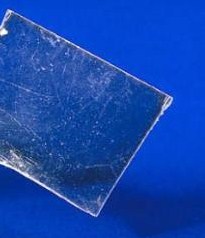
isinglass sheet
   Isinglass is a particular pure, transparent form of animal gelatin. The material is much the same as that of fish scales. The supply of isinglass is obtained chiefly from the air bladders of certain fishes. Formerly the sturgeons of the Caspian and Black Seas were the main source of supply, but Brazil, and the East Indies now furnish apart of the isinglass of commerce. The name has been applied popularly but incorrectly to the thin sheets of mica used for the panels of coal stoves, which resembles isinglass in appearance only. Isinglass panels would burn out instantly. Isinglass dissolves readily in hot water. In cookery, it is used to make jellies, blancmange, and to thicken soup. Being akin to glue, it is used in the manufacture of certain cements and court plaster. It is employed as a sizing also to stiffen silks, gauze, and linen.